What is the difference between a side tipper and a rear tipper?

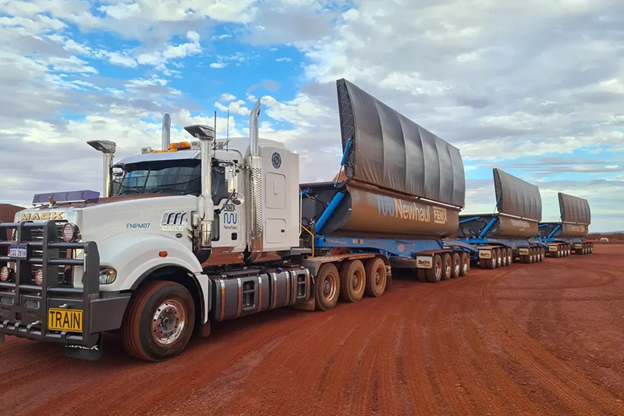
When you’re adding to a fleet or replacing an ageing trailer, the choice between a side tipper and a rear tipper comes up early and doesn’t resolve itself easily. Both configurations are proven in Australian bulk haulage. The difference lies in how each one discharges material and what that means for the sites, loads, and operational conditions you’re actually running.
This article covers the practical distinctions: discharge mechanics, site requirements, stability under load, cycle efficiency, and long-term maintenance demand. The objective is a clear basis for comparison, not a recommendation. The sections below work through each factor in turn.
How a Rear Tipper and a Side Tipper Actually Work
A rear tipper discharges by lifting the trailer body upward from a rear pivot point. The load drops behind the trailer as the body reaches full elevation. That lift height is significant. On a loaded semi, the body can rise several metres above ground level before material clears the tailgate.
A side tipper operates differently. Hydraulic rams tilt the body laterally, discharging material to one side of the trailer rather than behind it. The lift arc is lower throughout the entire cycle. That difference in mechanics has direct consequences for site clearance, ground stability requirements, and how the trailer behaves under load, each of which is covered in the sections below.
Site Conditions and Unloading Constraints
Rear tippers are well-suited to sites built around rear discharge. Purpose-built tip faces, bin mouths, and crusher feed points are designed to receive material dropped from behind the trailer. On those sites, a rear tipper integrates cleanly into the existing flow.
Vertical clearance is where rear tippers face a hard constraint. Lifting the body to full elevation near powerlines, low bridges, or overhead infrastructure creates genuine risk. On sites with those limitations, rear tipping is either restricted or prohibited entirely.
Side tippers remove the overhead clearance problem. The body tilts laterally rather than rising high, so the operational footprint above the trailer stays low. The trade-off is lateral clearance and ground level. The operator needs space beside the trailer for discharge and must confirm the ground is adequately level before tipping. On sloping or uneven ground, lateral instability becomes a real concern.
Side tippers are well-matched to windrow applications including road construction, civil earthworks, and aggregate spreading, where material needs to be laid along a run rather than dropped in a single pile. Site configuration, more than any other factor, tends to determine the right trailer type before payload or price enters the calculation.
Stability and Safety in Operation
Rear tipping raises the trailer’s centre of gravity substantially during discharge. On flat, firm ground with a consistent load, this is manageable. On uneven or soft terrain, the elevated body increases rollover exposure. Sticky loads compound the problem. Wet clay, heavy ore, and dense aggregate can hang up in a rear tipper body, creating uneven weight distribution at the point of highest elevation.
Side tipping keeps the centre of gravity lower throughout the cycle. The lateral discharge motion reduces the peak height the load reaches before it clears the body. This produces more predictable behaviour across variable site conditions, which is why side tippers are the more common choice on mine haul roads and remote civil projects where ground conditions shift. Bruce Rock Engineering builds its side tipper range specifically for these operating environments, including the sustained demands of the Pilbara.
Side tipping is not without its own stability requirements. Lateral rollover risk is real if the ground slopes toward the discharge side. The operational discipline required is different from rear tipping, not lesser. On well-prepared sites, the lower centre of gravity through the tipping cycle is a clear safety advantage.
Cycle Times and Fleet Productivity
Side tippers discharge faster in most bulk haulage applications. The lateral tipping motion moves material off the trailer quickly without requiring the body to reach full vertical elevation. On longer haul routes where the unloading phase drives daily cycle count, that time saving compounds across a full shift.
Rear tippers can close the gap on well-configured sites. A purpose-built tip face with good approach geometry allows a rear tipper to discharge cleanly and reposition without delay. In those controlled environments, cycle time differences between the two configurations narrow considerably.
The more meaningful productivity difference on civil and road construction work is what happens after the load drops. A side tipper creates a windrow along the unloading run, distributing material evenly across the width of the discharge path. A rear tipper drops a concentrated pile that requires spreading by additional machinery. For operators running road base, gravel, or aggregate on construction sites, that distinction reduces downstream equipment requirements and speeds up the overall site operation.
Maintenance and Long-Term Running Costs
Rear tipping places higher mechanical demand on the hydraulic system. Elevating a fully loaded body to discharge height cycles the rams, chassis, and pivot components under significant load. Over time, that repeated stress accumulates in wear on the hydraulic system and structural fatigue on the body and underframe.
Side tippers operate through a lower lift arc, which reduces peak hydraulic pressure during each tipping cycle. The practical effect over the trailer’s working life is lower wear on rams, seals, and chassis components. For an owner-operator carrying the maintenance cost directly, that difference is worth factoring into the total cost of ownership calculation, not just the purchase price.
Both configurations require consistent maintenance to perform reliably. On side tippers, the bowl or door hardware and discharge mechanisms need regular inspection. Operations running corrosive materials such as salt or certain mineral ores need to account for accelerated wear on bowl surfaces and hardware fittings. Neither trailer type is low-maintenance by nature, but the side tipper’s lower mechanical load through the tipping cycle gives it a structural advantage over a long operating life.
Choosing the Right Tipper Configuration for Your Operation
Neither configuration is the universal answer. The right choice depends on site conditions, material type, unloading infrastructure, and the specific work on the table. For operations running mining haulage, civil earthworks, or long-haul bulk with variable site access, side tippers offer a practical edge in stability, clearance, and cycle efficiency.