Top 5 Best AI Video Generation Tools: Text-to-Video, Image-to-Video & More

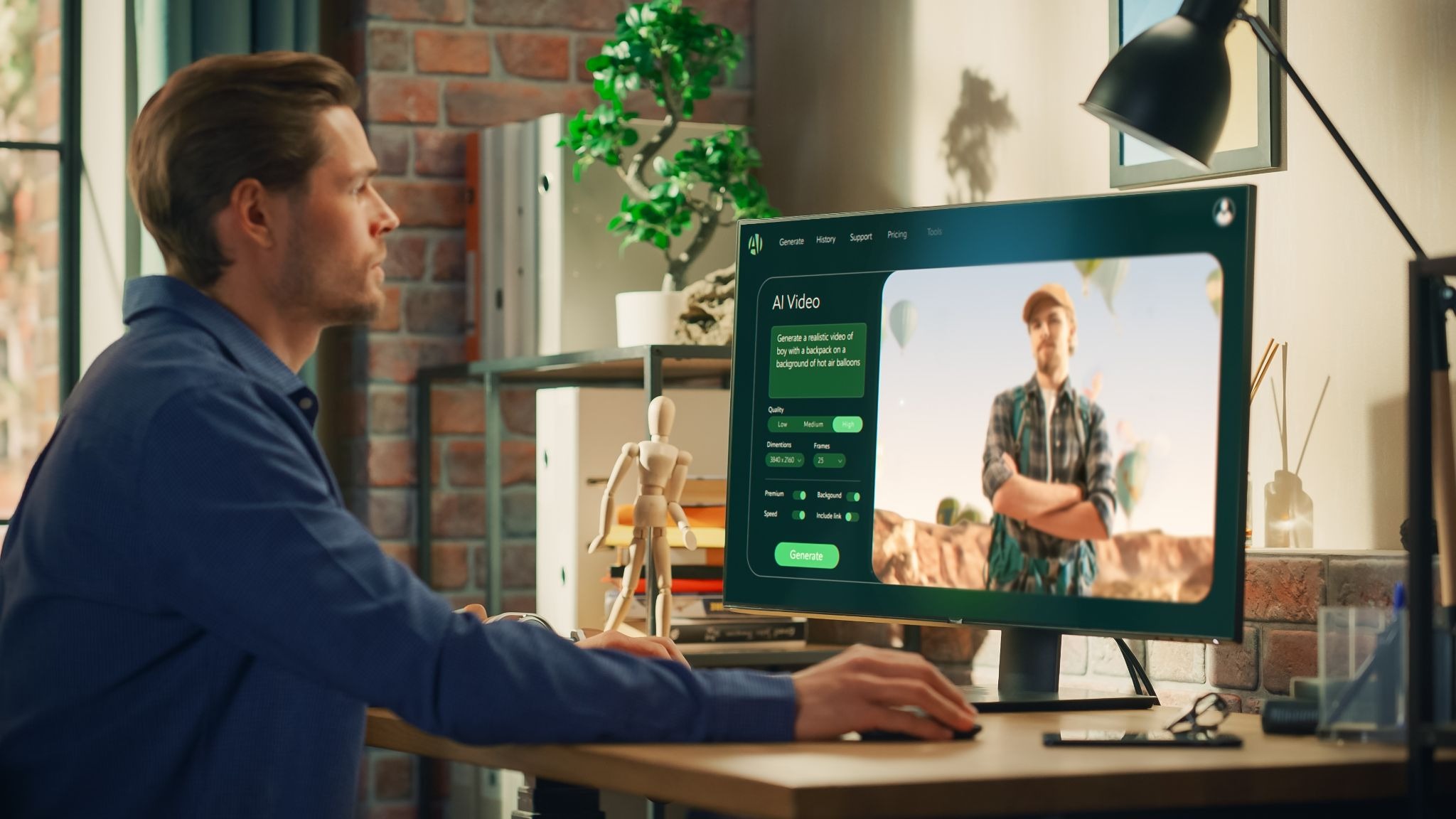
Video production has always been amongst the most inaccessible creative pathways – and it’s largely due to the fact that you need expensive hardware and software just to make anything presentable.
Unless you had the time, resources, and patience for it, video wasn’t really an option. You needed cameras, editing software, hard drives to store everything, and enough know-how to make it all work together without looking like an ugly elementary homework assignment. For many, that was enough for great ideas to never become great videos.
Fast forward to today and video remains one of the most engaging mediums. But it’s also still one of the most intensive. Whether you’re a marketer who needs to stay on top of social channels, a small business owner playing every role under the sun, or a creator looking to keep up with your own upload schedule, making great video content is a pressure we’ve all felt.
Factor in editing timelines, creative exhaustion, and evolving algorithms and interfaces. It’s no wonder half your ideas never come to fruition. But that’s where we start to see change. AI video generators are revolutionising the speed at which your ideas can go from thought to visual reality. This means instead of getting bogged down by the technical processes of video editing, you can focus on what you actually want to create, whether it be a proof of concept for a film or product videos and other generated assets for eCommerce.
So, let’s dive into five of the best AI video generators on offer at the moment:
1. Adobe Firefly
For those already in the Adobe family ecosystem, Adobe Firefly’s AI video generator is one of the absolute best to use. Firefly’s biggest advantage is that it’s meant to be an asset creation tool. You can create videos from text prompts, generate B-roll, and work on many other projects. Adobe has also ensured the output is commercially viable, a significant advantage for marketers and content creators.
Speaking of people who don’t have years of editing experience, Firefly’s UI is extremely easy to use. Firefly also enables those with no editing experience to create videos. All you have to do is describe the imagery you want, fine tune the result you get, and build off of it.
Tools like Firefly will prove most useful in the early and mid stages of production. You can quickly mock up what visuals may look like for an ad campaign before actually paying to have them produced. You can create additional B-roll for social posts, newsletters, and landing pages. Instead of looking at AI video generation tools as a way to completely eliminate video production, look at it as a way to speed up the process between ideas and having actual assets to test out, iterate on, and approve.
If you’re in the market for an AI video generator, especially for content marketing, social media, or other projects, Adobe Firefly is a top-tier option.
Best for: Marketers and content creators needing to quickly whip up materials for video campaigns.
2. Adobe Express
What users appreciate about Adobe Express is that it doesn’t aim to compete with Premiere Pro or Final Cut Pro for video editing. Adobe Express works great if you’re making videos for small businesses, social media accounts, and even school projects. You can access Express right through your web browser. Individuals flock to Adobe Express because it doesn’t make you jump through hoops to learn how to use the software.
A lot of Express’s features coincide with tips we’ve provided for learning AI editing for beginners. You won’t be able to make professional-level movies with years of backstory in the timeline. However, you can make quick cuts, add subtitles and music to your video without knowing how to use Premiere Pro.
Adobe Express is one of the best programs for those who want to create a video. Don’t let the learning curve for video editing software hold you back from creating content.
Best for: Beginners and small businesses who are looking to create video content quickly.
3. Runway
If you’ve spent any time around AI video discussions recently, you’ve likely heard of Runway.
Runway has become one of the most prominent names in AI video generation because of its consistent efforts to introduce new features and push the boundaries of what’s possible with AI videos. The platform offers various tools for AI video editing, from text-to-video creation to image animation, motion effects, and even background removal.
One of the most interesting things about Runway is that it’s often used in conjunction with traditional editing software. Rather than replacing an editor completely, it often acts as a creative assistant that helps generate footage, fill gaps, or create shots that would otherwise be difficult or expensive to produce.
The results can be incredibly impressive when used well, although there is still a learning curve. Nonetheless, it’s one of the most powerful tools available today.
Best for: creators and editors who want advanced AI-assisted video generation to enhance traditional editing workflows and produce complex visuals faster.
4. Google Veo
Google’s Veo has quickly become one of the most talked-about AI video generators in the industry. Veo is pretty well known for its ability to create hyper-realistic videos from basic text prompts. The motion features are noticeably smoother than many of the other AI video tools available today, and the level of detail can be genuinely impressive.
One of the biggest strengths of Veo is its understanding of natural language. There’s no need for excessively long and complicated prompts to achieve great results from the generator. In many cases, describing a scene in plain English is enough to generate something useful.
For those in the film, advertising, marketing, or content creation industries, Veo is a fascinating tool to watch. It’s still evolving rapidly, but it’s already showing what the next generation of AI video creation may look like.
Best for: filmmakers and advertisers looking to generate highly realistic, cinematic-quality video content from simple text prompts.
5. Kling AI
Kling AI may not be as widely recognised as some of the other platforms on this list, but it’s definitely worth some attention. Over the last year or so, it’s built a strong reputation among creators who regularly experiment with AI-generated video.
One area where Kling stands out is image-to-video generation. Upload a still image and provide some guidance, and the platform can create surprisingly dynamic motion from a static scene. The results often feel more cinematic than many people expect.
Many creators use Kling AI for storyboarding, creating social media content, and even developing their filmmaking concepts and stories. Although the AI application is far from perfect (and may sometimes generate weird videos just like most other AI tools), the technology offered by Kling is quite sophisticated and advanced. You can expect videos that look a lot more natural and polished than many competitor apps, which is really what makes it stand out.
Best for: creators experimenting with image-to-video storytelling, storyboarding, and visually dynamic social media content.
Which AI Video Tool Is Right For You?
AI video generation is advancing quickly. Many would say it’s making it much easier for anyone to start producing video content. Tasks that used to need cameras, film crews, and hours of editing can now be accomplished with a simple prompt and some tweaks along the way. Changes like this are opening doors for marketers, video creators, teachers, and filmmakers who simply want to realise ideas without getting bogged down by hours of complexity.
However, the “best” AI video tool really comes down to your goals. Some tools are better for quick and simple content creation. Others are better suited for longer output and more advanced features meant for video production assistance. We’re even starting to see creators use multiple tools in conjunction with one another.
Above all else, remember these tools should be working for you. They won’t replace a well-developed idea and a strong sense of storytelling. But, they can amplify your creativity if you know how to direct the technology to your desired outcome.
The future of this tech hinges not on who employs AI, but on who understands how to harness its power.