Running White-Label PPC Without Losing Control of Client Ad Spend

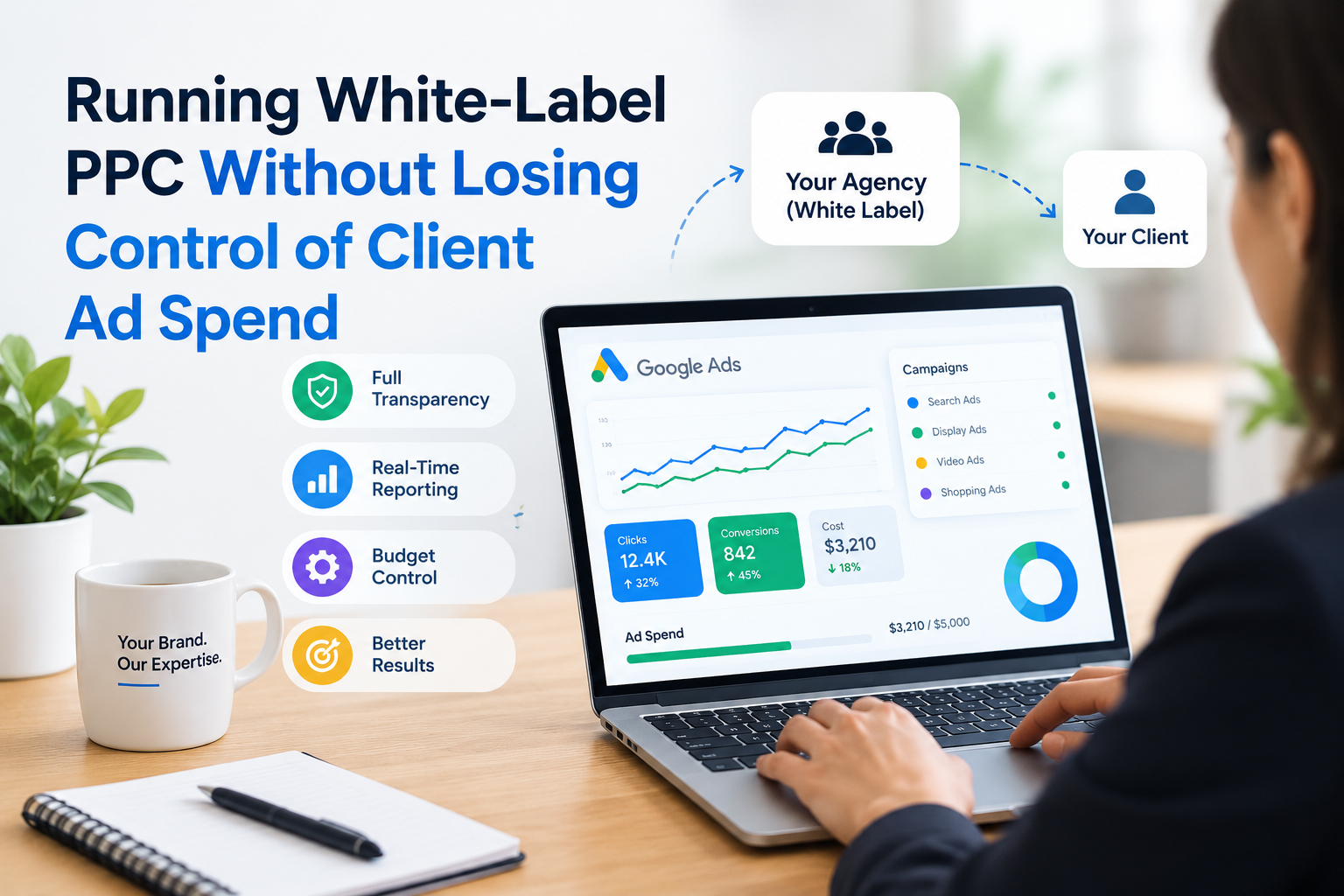
Running White-Label PPC Without Losing Control of Client Ad Spend
Paid media is one of the fastest ways for an agency to grow revenue, and one of the fastest ways to lose a client. SEO results build over months, so small delays are often forgiven. PPC is different. Budgets are spent daily, results show up in dashboards every morning, and a single bad week can shake a client’s confidence.
That’s why many agencies hesitate to hand paid media to a white-label partner, even when their in-house team is clearly stretched. The worry is understandable: if someone outside the agency is managing client accounts, who is watching the spend?
Handled well, white-label PPC gives agencies more specialist capacity without giving up control. This article covers how the model works, where it usually goes wrong, and how to set it up so the agency stays firmly in charge of every client’s budget.
Why PPC Is Harder to Hand Off Than Most Services
Most white-label services deliver a finished asset: a website, an audit, or a set of creative assets. PPC is different. It’s an ongoing operation. Bids, budgets, keywords, audiences, creative, and tracking all need attention every week, sometimes every day.
That creates three challenges that other services don’t have to the same degree:
- Money is at risk in real time. A misconfigured campaign can overspend in hours, not weeks.
- Platforms change constantly. Automated bidding, new campaign types, and policy updates mean accounts need active, experienced management.
- Clients watch closely. Many have direct dashboard access, so problems are noticed quickly.
None of this makes PPC unsuitable for white-label delivery. It just means the setup has to be more deliberate.
Where White-Label PPC Usually Breaks Down
Most problems come from unclear ownership and missing guardrails, not from a lack of platform skill.
No clear account access rules. When it isn’t defined who can change budgets, launch campaigns, or edit tracking, mistakes are hard to prevent and harder to trace.
Strategy handed off along with execution. If the partner is deciding the client’s goals and priorities, the agency stops being the expert in the relationship.
Optimizing for the wrong metric. A partner told to “improve performance” may chase cheaper clicks when the client cares about qualified leads or revenue. Agencies also need to keep pace with changes in campaign automation and optimization, including Google AI Max and the changing strategy for Shopping campaigns, as they evaluate how campaign decisions affect performance.
Ignoring what happens after the click. Ads can be well managed and still underperform if the landing page is slow, unclear, or doesn’t match the ad. Campaign performance should therefore be evaluated alongside the post-click experience, including whether the landing page gives visitors a clear path to conversion.
Reports nobody can act on. Long exports of impressions, clicks, and click-through rates don’t tell the client whether their money is working.
Agencies partner with Mavlers Agency to strengthen their PPC and paid media delivery across client accounts.
Setting Up White-Label PPC: Five Practical Steps
1. Keep strategy and budget decisions in-house. The agency agrees on goals, budgets, and priorities with the client. The partner executes within those limits: building campaigns, managing bids, testing creative, and handling day-to-day optimization.
2. Set spend guardrails in writing. Define daily and monthly budget limits for each account, who can change them, and what needs agency approval, such as launching new campaigns or raising budgets above an agreed threshold.
3. Agree on one primary success metric per client. This might be cost per qualified lead, return on ad spend, or cost per acquisition. Everything in the account, and every report, should be built around that number.
4. Check tracking before optimizing anything. Confirm conversion tracking, analytics goals, and any CRM integration are working correctly. Optimizing on bad data wastes budget faster than not optimizing at all.
5. Build a regular review rhythm. Schedule a short weekly check-in on spend pacing and key results, plus a deeper monthly review of strategy and tests. Agree on how urgent issues, such as a sudden spend spike, are flagged and how quickly the team must respond.
What a Good White-Label PPC Partner Brings
A strong partner brings experienced specialists, experience across accounts and industries, and established processes for audits, campaign builds, and reporting. It should also understand how agencies work: white-label reports, no direct contact with the agency’s clients, and clear communication with the agency team.
When evaluating options, ask how the partner handles budget changes, how quickly it responds to urgent issues, and what its reporting looks like. A sample audit of one existing account is often the best test.
For agencies that need additional paid media capacity, white-label PPC services can provide specialist campaign execution under the agency’s brand while allowing the agency to retain ownership of client relationships, strategy, and budget approvals.
From an operational perspective, the agencies that get the best results from white-label PPC are those that treat budget control as a shared process, not simply a matter of trust. When spend limits, approval rules, and success metrics are agreed upfront, the delivery team can move quickly on optimization while the agency maintains oversight. Offshore teams can add capacity across time zones, provided monitoring responsibilities and escalation procedures are clearly defined.
“Clients don’t judge a PPC agency on how many campaigns it runs. They judge it on whether their budget is working. White-label PPC works when the agency owns the strategy and the guardrails, and the delivery team owns the daily execution. When both sides know exactly where that line is, clients get more expertise without the agency losing any control.”
— Nital Shah, Co-Founder, Mavlers Agency
Agencies partner with Mavlers Agency to strengthen their PPC and paid media delivery across client accounts. Clear budget limits, approval processes, and reporting expectations help agencies add specialist execution capacity while retaining control of campaign strategy and client relationships.
How to Tell If the Model Is Working
Start with the client’s primary metric. Is cost per lead, cost per acquisition, or return on ad spend moving in the right direction month over month? That matters more than clicks or impression share alone.
Next, check spend accuracy. Are accounts pacing to budget without surprises? A setup with good guardrails should minimize unexpected overspend and make any deviations easier to identify.
Then look at your own team. Are account managers spending less time inside ad platforms and more time on client strategy and growth conversations? Finally, watch retention on PPC clients specifically. Stable or improving retention can indicate that the delivery model is working, particularly when considered alongside performance and client feedback.
Choosing Which Accounts to Hand Off First
Start with accounts that have clean tracking, stable budgets, and clear goals. Ongoing search campaigns for lead generation or ecommerce are usually good candidates. New accounts with unclear goals, broken tracking, or highly sensitive clients are better kept close until the process has been tested.
After the first few accounts, the handoff can become easier. The partner learns the agency’s standards, reports become more consistent, and the agency can take on new PPC clients without hiring another specialist each time.
Final Thoughts
White-label PPC isn’t about handing over the keys to client budgets. It’s about dividing the work clearly: the agency owns strategy, budgets, and the client relationship, while a specialist team handles the daily execution that keeps accounts performing.
If you’re considering it, start with one stable account. Agree on the guardrails, success metric, and reporting format, then expand once the process works the way you want it to.