Demand Generation vs Lead Generation: Which One Deserves the Next Marketing Dollar?

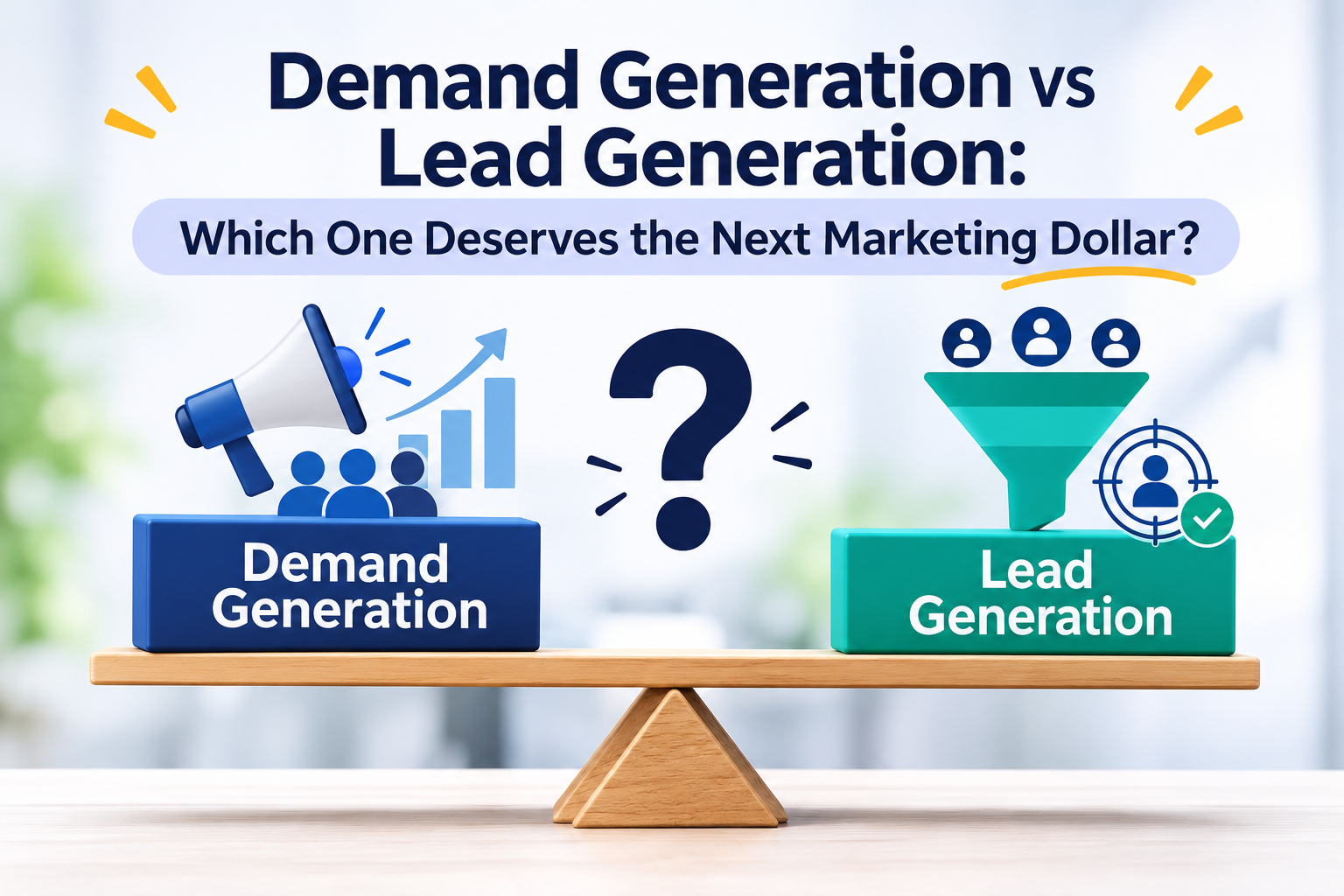
When marketing budgets come under pressure, businesses often face a familiar question: should the next dollar go toward generating more leads or building demand?
The two terms are sometimes used interchangeably, but they describe different parts of the marketing process. Lead generation focuses on identifying people who have shown some interest and creating opportunities for sales teams to follow up. Demand generation works earlier in the buyer journey. It helps the right audience understand a problem, become familiar with possible solutions and develop confidence in a business before making contact.
Both approaches have a role in sustainable growth. The challenge is knowing which one needs more attention at a particular stage. Increasing lead volume will not solve a lack of awareness, just as investing in awareness alone may not help a business that already has interested prospects but struggles to convert them.
The decision should come down to where the marketing and sales process is losing potential customers.
What Is Lead Generation?
Lead generation is the process of attracting potential customers and collecting information that allows a business to follow up with them. It focuses on capturing existing interest and turning it into a sales opportunity.
Common lead-generation activities include:
- Gated resources such as ebooks, reports and templates.
- Paid search campaigns targeting people actively looking for a solution.
- Webinar registrations and event sign-ups.
- Contact forms, demo requests and free-trial offers.
- Targeted outbound prospecting to relevant businesses and decision-makers.
- Landing pages designed to encourage enquiries or other specific actions.
The appeal is that lead-generation campaigns can produce measurable activity relatively quickly. A business can launch a campaign, receive form submissions and begin following up with prospects within days.
However, the number of leads collected does not automatically indicate business value. Someone downloading a report may be researching a topic rather than evaluating a purchase. A person requesting a demo may have a genuine buying requirement, but that still needs to be confirmed.
When marketing teams focus only on lead volume or cost per lead, they can overlook whether those contacts become qualified opportunities. Sales teams may then spend time following up with people who have little intention or ability to buy.
Lead generation works best when businesses understand who they want to reach, offer something relevant and have a process for assessing lead quality.
What Is Demand Generation?
Demand generation is a broader approach to building awareness, interest and trust among potential customers. Rather than focusing only on collecting contact details, it helps buyers understand the problems a business solves and why its offering may be relevant.
Typical demand-generation activities include:
- Educational content that answers questions buyers ask during research.
- Organic search and AI search visibility for relevant topics.
- Expert commentary and thought leadership on platforms such as LinkedIn.
- Paid campaigns that introduce solutions to relevant audiences.
- Email communication that helps prospects evaluate their options.
- Case studies, comparisons and customer proof that support buying decisions.
Demand generation can influence buyers before they are ready to speak with sales. Someone may read an article, see an expert’s post, encounter a brand in search results or hear about a company through a recommendation. These interactions can build familiarity even when the person does not immediately complete a form.
Its impact can take longer to understand because not every interaction produces a direct enquiry. Businesses may need to look at a combination of indicators, including branded search activity, relevant website visits, engagement with educational resources, inbound enquiries and qualified pipeline.
Demand generation does not replace lead generation. It helps create the conditions in which lead-generation activities can become more effective.
The Key Differences in Practice
1. The Problem Each Approach Solves
Lead generation addresses a capture problem. People are already looking for a solution or showing interest, but the business needs a way to identify and engage them.
Demand generation addresses an awareness and consideration problem. Potential buyers may not know the business exists, may not fully understand the problem or may not yet have enough information to consider its offering.
For example, a company selling cybersecurity software may receive enquiries from businesses actively searching for a security solution. Search campaigns and demo forms can help capture that existing interest.
But if many potential customers do not understand a particular security risk, the company may also need educational resources, expert commentary and awareness campaigns. These activities can help buyers recognise the issue before they begin comparing providers.
The right investment depends on whether the immediate gap is a lack of interest, a lack of visibility or a failure to capture existing intent.
2. How Success Is Measured
Lead generation is commonly measured through metrics such as:
- Number of leads generated.
- Cost per lead.
- Lead-to-opportunity conversion rate.
- Demo requests or consultation bookings.
- Sales-qualified leads.
Demand generation requires a wider view. Businesses may track:
- Growth in relevant branded searches.
- Engagement with educational content.
- Direct and organic website visits.
- Qualified opportunities and pipeline value.
- Changes in conversion rates and sales-cycle length.
Neither approach should be judged by a single metric. A campaign may generate inexpensive leads that rarely progress, while an educational campaign may influence buying decisions without producing immediate form submissions.
The more useful question is whether marketing activity is contributing to qualified opportunities and revenue.
For paid campaigns, offline conversion tracking can help connect advertising activity with outcomes recorded later in a CRM, such as sales-qualified leads, opportunities and closed deals. This gives businesses a clearer view of which campaigns contribute to meaningful business results rather than just initial enquiries.
A high number of leads does not necessarily mean that marketing is contributing to revenue. Mavlers Agency measures its work in a qualified pipeline, not clicks, impressions or lead volume.
Darshan Modi, Director of Digital Marketing at Mavlers Agency, highlights why reliable measurement matters:
“Tracking is the least exciting part of demand generation and the most important. Without it, every decision is a guess.”
3. Timeline to Results
Lead generation can produce visible activity soon after a campaign launches, particularly when it targets people who already have purchase intent. However, the time needed to turn those leads into customers depends on the sales cycle, offer and quality of the enquiries.
Demand generation usually requires a longer period to build awareness and familiarity. Buyers may encounter a brand several times before they are ready to evaluate its products or services.
That investment can support future lead-generation activity. Buyers who already understand the problem and have confidence in a business may be more willing to engage and progress through the sales process.
This does not mean demand generation always reduces acquisition costs or that lead generation always delivers faster revenue. Outcomes depend on the market, campaign execution, sales process and measurement.
4. Relationship With Sales
Lead generation can create friction between marketing and sales when the teams have different expectations about lead quality.
Marketing may report a successful month because it delivered a high number of contacts. Sales may see a different picture if those contacts are not relevant, do not have a clear requirement or are not ready to evaluate a solution.
Demand generation can help address this gap by giving potential buyers useful information before they enter a sales conversation. However, it does not automatically create better alignment.
Marketing and sales still need to agree on what qualifies as a lead, what makes an opportunity sales-ready and how feedback from sales will influence future campaigns.
Regular discussions about lead quality, conversion rates and lost opportunities are more useful than relying on separate performance reports.
5. Dependence on the Website
Both approaches rely on a website that makes it easy for visitors to understand an offer and decide what to do next.
Lead generation needs clear forms, relevant landing pages and useful offers. Demand generation needs informative pages that answer buyer questions, explain solutions and build confidence.
A website can undermine both approaches when its messaging is unclear, navigation is confusing or visitors cannot find the information they need.
When Lead Generation Deserves the Next Dollar
Lead generation may deserve more investment when:
- There is clear existing demand for the product or service.
- Potential customers are actively searching for solutions.
- The business has a recognised presence in its target market.
- The sales team has the capacity to follow up with additional prospects.
- The website and landing pages are converting relevant visitors.
- Tracking makes it possible to identify which leads progress into opportunities.
In this situation, improving search campaigns, landing pages, forms or follow-up processes may help the business capture more of the interest already available in the market.
Before increasing spend, however, it is worth checking whether the current leads are relevant and whether the sales team can convert them.
When Demand Generation Deserves the Next Dollar
Demand generation may need greater attention when:
- The business receives too few relevant enquiries.
- Potential customers do not understand the problem the product solves.
- Sales teams regularly need to explain basic concepts during early conversations.
- Competitors are more visible during buyers’ research.
- The sales cycle is long and involves several decision-makers.
- Paid campaigns generate leads, but those leads show limited buying intent.
- Buyers are researching through search engines, industry resources and AI assistants, but the brand is rarely part of that research.
In these situations, more lead forms may not address the underlying issue. Educational content, search visibility, expert insights and customer proof can help build familiarity and give potential buyers more reasons to consider the business.
Businesses looking to bring these activities together may consider working with a demand generation company for growing brands. The right approach should connect awareness-building with lead capture, while keeping both tied to the quality of opportunities generated.
A Practical Way to Decide Where the Budget Should Go
Instead of choosing one approach permanently, businesses should examine where potential customers are dropping out of the buying journey.
1. Check tracking before changing budgets.
Make sure website activity, campaign sources, CRM stages and sales outcomes can be connected. Without reliable tracking, it is difficult to know whether a campaign is producing useful opportunities.
2. Review lead-to-opportunity conversion.
Look beyond the number of contacts generated. If a large proportion of leads never become qualified opportunities, investigate the audience, offer, targeting and follow-up process.
3. Speak with the sales team.
Ask what prospects understand before the first conversation, what questions they repeatedly ask and why potential deals are lost. These conversations can reveal whether the business needs better lead qualification, more buyer education or clearer positioning.
4. Compare channels using pipeline outcomes.
Cost per lead can be useful, but it should not be the only measure. Review which channels contribute to qualified opportunities, pipeline value and eventual revenue.
5. Keep short-term capture and long-term demand connected.
Most growing businesses need both. The balance may change as the business develops, enters new markets or introduces new products. Budget decisions should reflect those changes rather than follow a fixed split.
Making the Right Choice for Your Next Marketing Dollar
Lead generation and demand generation are not competing strategies. Lead generation captures interest that already exists, while demand generation helps create and develop that interest. A sustainable marketing programme needs both, but the balance should reflect the business’s current challenges.
If leads are plentiful but rarely become qualified opportunities, the answer may lie in improving audience quality, buyer education or the wider demand-generation programme. If potential customers are already searching for a solution but are not finding the business, better lead capture and conversion processes may be the immediate priority.
Start by understanding where the pipeline is breaking. When marketing and sales can see which activities contribute to qualified opportunities, deciding where the next dollar should go becomes a more informed business decision.